Business Name: BeeHive Homes of Crownridge Assisted Living & Memory Care
Address: 6919 Camp Bullis Rd, San Antonio, TX 78256
Phone: (210) 874-5996
BeeHive Homes of Crownridge Assisted Living & Memory Care
We are a small, 16 bed, assisted living home. We are committed to helping our residents thrive in a caring, happy environment.
6919 Camp Bullis Rd, San Antonio, TX 78256
Business Hours
Monday thru Saturday: 9:00am to 5:00pm
Facebook: https://www.facebook.com/sweethoneybees
Instagram: https://www.instagram.com/sweethoneybees19/
Families do not comparison look for senior care in a vacuum. They are typically doing it after a scare, or at the end of a long stretch of unpaid caregiving. The urgency is real, however the prices is opaque. Memory care and assisted living look comparable from the outdoors, yet they are constructed and staffed in a different way, which difference shows up on the costs. The best setting can support an individual who is declining from dementia. The incorrect fit can drain pipes cost savings without solving the issue that set off the move.
I have actually toured hundreds of communities with households, worked out rates, combed through service strategies, and saw senior citizens do better or even worse depending upon the match. Expenses vary widely by market and company, but the patterns are consistent enough to develop a working model. The objective here is not to crown a winner. It is to assist you understand what you are spending for, when the premium for memory care makes sense, and how to expect the real month-to-month cost as soon as all line products are added.
What you are comparing, really
Assisted living and memory care often share a roofing system, a kitchen area, and an activities director. Below, they run two different operating models.
Assisted living is developed for older grownups who require assist with activities of daily living like bathing, dressing, and medication tips, but who can follow directions, make fundamental choices, and stay fairly safe with intermittent supervision. Care is arranged and foreseeable. Cueing works.
Memory care is constructed around cognitive disability, especially Alzheimer's and associated dementias. It includes safe and secure boundaries, customized environments and dining, more regular staff contact, trained dementia care techniques, and shows that reduces distress habits. Care is anticipatory and regular. Cueing may not work, so staff intervene earlier and more often.
That shift from intermittent help to continuous guidance drives staffing expenses, and staffing is the biggest expenditure in any care setting. The price space streams from there.
Typical monthly cost, with honest ranges
National datasets put assisted living regular monthly means in the $4,000 to $6,000 range, with huge city markets and coastal states pressing higher. In the very same markets, memory care typically runs 20 to 40 percent more, frequently landing in between $5,000 and $9,000 each month. In high-cost metros, I regularly see assisted living beginning around $6,000 to $7,500, and memory care from $7,500 to $11,000. In smaller Midwestern towns, it is not uncommon to discover assisted living around $3,800 to $4,800 and memory care from $5,000 to $6,500.
These are base rates. The final bill is developed on top of them, and this is where families get surprised. Most communities price quote a beginning apartment or condo cost that includes rent, meals, standard housekeeping, and energies. Then they layer on care charges that depend upon an evaluation. Memory care often packages more into its base to simplify billing, but not always.
What creates the gap
Memory care expenses more due to the fact that it delivers a different level of control and supervision. Here is what normally drives the premium, beyond marketing language.
- Staffing intensity. In assisted living, daytime staffing frequently appears like one caretaker for 12 to 18 citizens, with med techs and nurses drifting. Over night ratios extend further. In memory care, daytime ratios of one caretaker for 6 to 10 citizens are common, sometimes tighter in smaller wings, and nights may be 1 to 10 or 1 to 12. Those extra hands show up in payroll. Training and program style. Dementia care personnel receive specialized training on de escalation, redirection, and non pharmacologic strategies. Programs set up short, structured activities that match attention periods, with purposeful repetition. That preparation time becomes part of the operating cost. Environmental controls. Secured doors, wander management systems, enclosed yards, visual hints, reduced glare lighting, and streamlined layout lower threat and agitation. Structure and keeping those functions is capital intensive. Dining and medication approaches. Modified menus, high calorie finger foods, hydration rounds, smaller sized dining-room, and co dining with personnel reduce weight loss and choking danger. More frequent med passes and crushed or liquid types increase personnel time. Behavior support. When exit seeking, sleep inversion, or sundowning exists, care plans include check ins and interventions that an assisted living wing can not reliably staff.
Providers do not all carry out these aspects with the same rigor. A true memory care home feels different the moment you enter. If it does not, you might be paying a premium for a label instead of a model.
How prices models work under the hood
Communities generate income and cover staffing in several ways. Understanding their model assists you forecast the bill.
A la carte assisted living prices begins with a base rent and adds care levels, typically connected to a point system. Each task, such as help with bathing or insulin administration, brings points. The total maps to a level that includes a monthly fee. Medication management is typically a separate charge, with price leaps based upon the number of medications or passes per day. Incontinence care charges can be flat or per episode, and supplies might be billed separately. You might also see charges for accompanying to meals, transfer assistance, or extra housekeeping if clutter and spills are frequent.
All inclusive memory care, common but not universal, covers most everyday care into a single rate. Even then, some services sit outside the package, like injections, complex wound care, one to one supervision for high fall risk, or transport to regular appointments. When memory care utilizes levels, the increments between tiers are normally steeper than in assisted living since staffing modifications drive the delta.
Across both settings, anticipate a one time neighborhood charge at relocation in, commonly $2,000 to $6,000. Some neighborhoods discount or waive this for fast move ins or throughout slow seasons. Second individual costs for couples can add $800 to $1,500 monthly in assisted living and are less common in memory care, where apartment or condos are frequently personal studios. Annual rent increases of 3 to 8 percent are typical. Ask for the historical average at that property, not the company wide talking point.
The neglected costs at home, and why they matter to the comparison
Families often determine assisted living against lease and groceries, then choose to wait. A better comparison consists of the value of unpaid caregiving, the money expense of employed help, and the dangers of a home that is no longer safe.
Non medical home care averages $28 to $40 per hour in numerous markets, higher in big cities. Even 12 hours a day of protection runs $10,000 to $14,000 monthly, and 24 hour protection, if you can staff it, can surpass $20,000. Include medication setup by a nurse, incontinence materials, fall sensing units, and a couple of thousand dollars in home adjustments for grab bars, lighting, and door alarms. For couples, care in the house can make psychological and financial sense longer, but the mathematics moves quick when dementia progresses.
I have actually viewed partners try to anchor overnight care by themselves, just to drop off to sleep during the crucial 1 a.m. To 4 a.m. Window when a partner with sundowning wanders or rummages. A single injury or hospitalization removes the savings from delaying a move.
When memory care deserves the premium
A resident with early phase cognitive problems might grow in assisted living if the team can cue efficiently, the environment is calm, and the person takes part in programming. The month-to-month cost savings can be significant. However particular patterns tell me memory care will be the much better buy even if it looks more expensive on paper.
Exit looking for. If somebody attempts doors, follows staff into service corridors, or fixes on leaving, a secure memory care environment spares you the expense of private sitters layered on top of assisted living.
Unpredictable nights. Sleep inversion interrupts whole buildings. Memory care personnel expect it, schedule for it, and have safe spaces for pacing.
Disinhibited or aggressive behaviors. A memory care home with qualified personnel checks out the habits as communication and responds without pity or punishment. Assisted living often intensifies to 911 or discharge.
Meal refusal or weight-loss. Memory care dining rooms are smaller sized and calmer, with staff who will sit and consume with citizens to hint bites, use finger foods, and try once again an hour later. Those touches stabilize weights and decrease health center trips for dehydration.
Repetitive calls and alarms. In assisted living, a resident who pushes the call pendant every ten minutes will either be identified tough or will need a private caretaker. Memory care creates the day to remove the trigger.
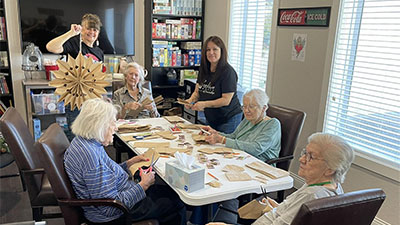
I keep in mind a retired engineer who moved into assisted living after a fall. He had mild amnesia and did fine for 6 months. Then he started taking tools off the upkeep cart and "fixing" the door hardware. The community reacted with suggestions and warnings, then a notice that he would require to hire a 1 to 1 buddy. We moved him to the memory care wing next door. The group gave him a safe workbench with taken apart radios and appointed him as an "consultant." His costs went up by $1,200 a month, but we removed $8,000 in sitter costs and the constant friction disappeared.
What you get for your money in a strong memory care program
Look for nuts and bolts that do not show up in glossy pamphlets. Ask to walk the system at shift modification and at supper, not only at 10 a.m. When everything is peaceful. You should see staff utilizing names, crouching to eye level, and offering 2 clear choices instead of open ended questions. The schedule ought to repeat breakfast, activity, rest, and outdoor time in a foreseeable rhythm, not random crafts. Back of home storage must be locked or monitored so citizens do not search in chemicals or linens. The nurse needs to carry a simple, present lineup of recognized habits and comfort routines.
Good memory care decreases hospitalizations by seeing urinary system infections early, keeping hydration, and avoiding falls through regular check ins and correct footwear. It also safeguards the self-respect of citizens who can no longer self supporter. That is the worth proposal beyond square footage and chandeliers.
How community type affects price
Standalone memory care neighborhoods run just dementia care, typically in smaller, function constructed structures. They tend to have tighter staffing ratios and more constant programs. Rates is generally all inclusive or has fewer levels. They can be leaner on features like pool tables and salons since their value sits in care, not in resort functions. Rates are typically mid to high for the marketplace, but worth per dollar is strong when dementia is moderate to advanced.
Memory care communities within a larger assisted living let couples stay on one campus, which can preserve routines and minimize household travel time. The staffing model can be great, however sometimes the memory care wing acquires practices from the assisted living side that are not dementia particular. Rates follow the brand and structure, sometimes 5 to 10 percent above standalone competitors for comparable care.
Small residential choices, frequently licensed as board and care homes, serve 6 to 12 residents in a home. Staffing is intimate and versatile, meals are home prepared, and families like the personal feel. Expenses are regularly lower than big buildings, specifically in suburbs, but the variety is wide. You might trade big activity calendars for quieter days. For late phase illness or when movement is restricted, these homes can be both cost reliable and humane.
Skilled nursing with a memory care system is a different tier. It runs more costly than assisted living or memory care since it consists of licensed nursing around the clock and deals with medical intricacy like feeding tubes and advanced injury care. If a person needs that level, the comparison shifts from assisted living to nursing care, and various payers enter into play.
Who pays, and how to extend dollars lawfully and safely
Most households spend for assisted living or memory care independently. Medicare does not cover space and board in these settings. It might fund health services like therapy episodes or hospice, but not the day-to-day rent and care fees.

Long term care insurance coverage can be an effective lever. Policies usually pay a daily or month-to-month benefit once the insured requirements assist with 2 or more activities of daily living or has an extreme cognitive disability. Benefits typically run from $100 to $250 per day, often more, and can offset a large share of the regular monthly costs. You will require a plan of care signed by a licensed clinician and cooperative paperwork from the community to start claims and maintain them.
Veterans Help and Attendance adds a regular monthly stipend to qualifying veterans or making it through spouses who require aid with activities of daily living. Benefit amounts differ by status and alter each year, but they can add over a thousand dollars per month and often more than two thousand for a veteran with a dependent partner. Eligibility depends upon service history, assets, income relative to expenditures, and medical need. Work with a recognized VA claims representative, not a service provider sales representative, to avoid missteps.
Medicaid waivers in lots of states support assisted living or memory look after those with limited possessions. The protection and rates differ by state, and memory care may receive the exact same rate as assisted living despite the fact that expenses are higher. Slots are restricted, waitlists are common, and some neighborhoods accept just a small portion of Medicaid residents. Families sometimes plan an invest down, paying independently until assets reach the limit, then obtaining Medicaid. It is critical to track all expenditures and look for counsel before making gifts or transfers, provided look back rules.
Tax planning matters too. If a resident is chronically ill and getting services under a strategy of care, a considerable part, often all, of assisted living or memory care costs can certify as a deductible medical expenditure, based on internal revenue service thresholds. Families miss this and leave money on the table. An accounting professional who understands senior care can equate invoices into deductible amounts.
Negotiating and timing without playing games
Communities are businesses with tenancy targets. Costs are firm in hot markets, however there is generally space to adjust charges at the margins. The most simple wins I see are credits against the neighborhood fee, lowered charges for the first care level for 60 to 90 days, or holding the current year's rate boost for a new resident. Discount rates tend to be larger in summer season and around major holidays when relocation ins sluggish, and smaller sized in spring.

Do not negotiate so tough that you sour the relationship you will depend on. A fair cost and a responsive director of nursing beats an additional $300 off the base lease. Bring a clean evaluation from a current medical visit, have medications pre packaged by a partnering drug store if possible, and be transparent about behaviors. Surprises after move in cause mid month level increases and broken trust.
A number of real life comparisons
Case one, assisted living makes good sense. A retired teacher with mild Alzheimer's lives alone. She needs aid bathing two times a week, takes seven medications two times daily, and forgets meals unless cued. She delights in group activities and follows directions. Assisted living quotes $4,800 base lease for a one bedroom, $450 for medication management, and $350 for care level one. Incontinence is rare. Her all in has to do with $5,600 monthly. Memory care next door prices estimate $6,900 all inclusive. She explores both, prefers the larger activity calendar in assisted living, and the group feels confident they can hint meals. She moves to assisted living, succeeds for 18 months, and spends the cost savings on a part time personal buddy during the late afternoon, 3 days a week.
Case two, memory care prevents crisis spending. A former specialist in his late seventies has vascular dementia with varying insight. He roams at night and has set off the neighborhood smoke alarm twice while looking for a cigarette. Assisted living quotes $5,900 base, $600 for medication management, and level 3 care at $1,200 due to transfers and regular cueing. The director silently discusses that he will need a personal overnight sitter at $28 per hour up until he "stabilizes." That is another $8,400 monthly. Memory care a few miles away offers a private studio at $7,800 all inclusive, with safe and secure patios for supervised smoking cigarettes and structured late evening activities. He relocates to memory care, the alarms stop, and the all in expense is thousands less than assisted living plus sitters.
Edge cases and judgment calls
Couples make complex the mathematics. If one partner is cognitively well and the other needs memory care, cohabiting in assisted living can maintain connection and reduce total rent, but only if the caregiving partner is not pulled into 24 hr responsibility once again. I have actually seen spouses insist on keeping their partner with dementia in assisted living for love, then burn out and need hospitalization. Splitting apartment or condos throughout assisted living and memory care on the exact same campus can cost more, but it can save the well spouse's health.
Early start dementia brings higher activity levels and stronger bodies, which can worry both settings. The ideal memory care home will channel energy into safe projects and repeated jobs. An assisted living wing is less most likely to prosper without consistent companions.
Cultural fit matters. In some families, a little residential memory care home with home design cooking and staff who speak the resident's mother tongue produces much better results at a lower rate than a sleek structure with a cinema. Results impact expenses. Less hospitalizations and calmer days reduce include on costs and personal caregiver hours.
What to ask throughout trips, with an eye on cost
Use a brief script each time so you can compare BeeHive Homes of Crownridge Assisted Living & Memory Care dementia care answers later. Keep it conversational. The objective is to discover how the building runs, not to catch anyone out.
- How do you figure out care levels, and when are they reassessed? Can I see a blank assessment tool? What is included in the base rate, and what, specifically, is not? Please show me the exemptions in writing. What are your present medication management charges and thresholds? How do you deal with crushed medications and more than two passes a day? What is your historic annual boost at this property for the previous 3 years? If my parent's needs increase rapidly, what occurs mid month? Do you prorate, or does the new level start the following month?
If a salesperson hurries these answers or glosses over care level mechanics, keep looking. You desire a team that is comfy talking about the unglamorous details, because that is what drives your bill.
Practical methods to make either option more affordable
Move in size and timing matter. Studios are frequently 10 to 20 percent less than one bedrooms, and many citizens invest waking hours outside the apartment. Corner units and views are nice, but they do not change care results. If a neighborhood is 80 percent occupied, ask about price security if you can dedicate to a date within 30 days.
Right size services. If your parent consumes lightly and chooses breakfast in their space, a neighborhood with needed restaurant design dining 3 times a day may not be a great fit. You will be paying for a service they will not use. In memory care, go for programs your parent will attend. Spending for a rich calendar they ignore is squandered money.
Align pharmacy setups. Communities that partner with a particular drug store often waive med pass surcharges for complicated packaging. If you stick to an outside drug store, you may incur handling charges or more frequent deliveries.
Check the billing code for incontinence. Some communities waive the incontinence care cost if the resident uses pull ups just in the evening and handles changing separately. Little modifications in strategy language can save you $100 to $300 a month.
Keep the length of remain in mind. If you think a health center transfer is most likely within months, a big neighborhood charge amortizes improperly. A company ready to lower or credit that cost represents real savings if the stay is short.
Final perspective
Comparing a memory care home to assisted living is not simply a spreadsheet workout. It is an attempt to match an individual's pattern of requirements to a structure's pattern of staffing and guidance. The least expensive line item in some cases brings the highest surprise expense, specifically when dementia brings exit looking for, interfered with nights, or behaviors that an assisted living wing can not support without layering private caregivers.
If you construct a careful apples to apples budget, test how each setting manages your parent's specific concerns, and look beyond chandeliers to staff practice, you can spend on what modifications results instead of on what pictures well. That is where real value lives, and it is the best way to protect both your parent's self-respect and their savings.
BeeHive Homes of Crownridge Assisted Living has license number of 307787
BeeHive Homes of Crownridge Assisted Living is located at 6919 Camp Bullis Road, San Antonio, TX 78256
BeeHive Homes of Crownridge Assisted Living has capacity of 16 residents
BeeHive Homes of Crownridge Assisted Living offers private rooms
BeeHive Homes of Crownridge Assisted Living includes private bathrooms with ADA-compliant showers
BeeHive Homes of Crownridge Assisted Living provides 24/7 caregiver support
BeeHive Homes of Crownridge Assisted Living provides medication management
BeeHive Homes of Crownridge Assisted Living serves home-cooked meals daily
BeeHive Homes of Crownridge Assisted Living offers housekeeping services
BeeHive Homes of Crownridge Assisted Living offers laundry services
BeeHive Homes of Crownridge Assisted Living provides life-enrichment activities
BeeHive Homes of Crownridge Assisted Living is described as a homelike residential environment
BeeHive Homes of Crownridge Assisted Living supports seniors seeking independence
BeeHive Homes of Crownridge Assisted Living accommodates residents with early memory-loss needs
BeeHive Homes of Crownridge Assisted Living does not use a locked-facility memory-care model
BeeHive Homes of Crownridge Assisted Living partners with Senior Care Associates for veteran benefit assistance
BeeHive Homes of Crownridge Assisted Living provides a calming and consistent environment
BeeHive Homes of Crownridge Assisted Living serves the communities of Crownridge, Leon Springs, Fair Oaks Ranch, Dominion, Boerne, Helotes, Shavano Park, and Stone Oak
BeeHive Homes of Crownridge Assisted Living is described by families as feeling like home
BeeHive Homes of Crownridge Assisted Living offers all-inclusive pricing with no hidden fees
BeeHive Homes of Crownridge Assisted Living has a phone number of (210) 874-5996
BeeHive Homes of Crownridge Assisted Living has an address of 6919 Camp Bullis Rd, San Antonio, TX 78256
BeeHive Homes of Crownridge Assisted Living has a website https://beehivehomes.com/locations/san-antonio/
BeeHive Homes of Crownridge Assisted Living has Google Maps listing https://maps.app.goo.gl/YBAZ5KBQHmGznG5E6
BeeHive Homes of Crownridge Assisted Living has Facebook page https://www.facebook.com/sweethoneybees
BeeHive Homes of Crownridge Assisted Living has Instagram https://www.instagram.com/sweethoneybees19
BeeHive Homes of Crownridge Assisted Living won Top Assisted Living Homes 2025
BeeHive Homes of Crownridge Assisted Living earned Best Customer Service Award 2024
BeeHive Homes of Crownridge Assisted Living placed 1st for Senior Living Communities 2025
People Also Ask about BeeHive Homes of Crownridge Assisted Living
What is BeeHive Homes of Crownridge Assisted Living monthly room rate?
Our monthly rate depends on the level of care your loved one needs. We begin by meeting with each prospective resident and their family to ensure we’re a good fit. If we believe we can meet their needs, our nurse completes a full head-to-toe assessment and develops a personalized care plan. The current monthly rate for room, meals, and basic care is $5,900. For those needing a higher level of care, including memory support, the monthly rate is $6,500. There are no hidden costs or surprise fees. What you see is what you pay.
Can residents stay in BeeHive Homes of Crownridge Assisted Living until the end of their life?
Usually yes. There are exceptions such as when there are safety issues with the resident or they need 24 hour skilled nursing services.
Does BeeHive Homes of Crownridge Assisted Living have a nurse on staff?
Yes. Our nurse is on-site as often as is needed and is available 24/7.
BeeHive Homes of Crownridge Assisted Living & Memory Care has license number of 307787
BeeHive Homes of Crownridge Assisted Living & Memory Care is located at 6919 Camp Bullis Road, San Antonio, TX 78256
BeeHive Homes of Crownridge Assisted Living & Memory Care has capacity of 16 residents
BeeHive Homes of Crownridge Assisted Living & Memory Care offers private rooms
BeeHive Homes of Crownridge Assisted Living & Memory Care includes private bathrooms with ADA-compliant showers
BeeHive Homes of Crownridge Assisted Living & Memory Care provides 24/7 caregiver support
BeeHive Homes of Crownridge Assisted Living & Memory Care provides medication management
BeeHive Homes of Crownridge Assisted Living & Memory Care serves home-cooked meals daily
BeeHive Homes of Crownridge Assisted Living & Memory Care offers housekeeping services
BeeHive Homes of Crownridge Assisted Living & Memory Care offers laundry services
BeeHive Homes of Crownridge Assisted Living & Memory Care provides life-enrichment activities
BeeHive Homes of Crownridge Assisted Living & Memory Care is described as a homelike residential environment
BeeHive Homes of Crownridge Assisted Living & Memory Care supports seniors seeking independence
BeeHive Homes of Crownridge Assisted Living & Memory Care accommodates residents with early memory-loss needs
BeeHive Homes of Crownridge Assisted Living & Memory Care does not use a locked-facility memory-care model
BeeHive Homes of Crownridge Assisted Living & Memory Care partners with Senior Care Associates for veteran benefit assistance
BeeHive Homes of Crownridge Assisted Living & Memory Care provides a calming and consistent environment
BeeHive Homes of Crownridge Assisted Living & Memory Care serves the communities of Crownridge, Leon Springs, Fair Oaks Ranch, Dominion, Boerne, Helotes, Shavano Park, and Stone Oak
BeeHive Homes of Crownridge Assisted Living & Memory Care is described by families as feeling like home
BeeHive Homes of Crownridge Assisted Living & Memory Care offers all-inclusive pricing with no hidden fees
BeeHive Homes of Crownridge Assisted Living & Memory Care has a phone number of (210) 874-5996
BeeHive Homes of Crownridge Assisted Living & Memory Care has an address of 6919 Camp Bullis Rd, San Antonio, TX 78256
BeeHive Homes of Crownridge Assisted Living & Memory Care has a website https://beehivehomes.com/locations/san-antonio/
BeeHive Homes of Crownridge Assisted Living & Memory Care has Google Maps listing https://maps.app.goo.gl/YBAZ5KBQHmGznG5E6
BeeHive Homes of Crownridge Assisted Living & Memory Care has Facebook page https://www.facebook.com/sweethoneybees
BeeHive Homes of Crownridge Assisted Living & Memory Care has Instagram https://www.instagram.com/sweethoneybees19
BeeHive Homes of Crownridge Assisted Living & Memory Care won Top Assisted Living Homes 2025
BeeHive Homes of Crownridge Assisted Living & Memory Care earned Best Customer Service Award 2024
BeeHive Homes of Crownridge Assisted Living & Memory Care placed 1st for Senior Living Communities 2025
People Also Ask about BeeHive Homes of Crownridge Assisted Living & Memory Care
What is BeeHive Homes of Crownridge Assisted Living & Memory Care monthly room rate?
Our monthly rate depends on the level of care your loved one needs. We begin by meeting with each prospective resident and their family to ensure we’re a good fit. If we believe we can meet their needs, our nurse completes a full head-to-toe assessment and develops a personalized care plan. The current monthly rate for room, meals, and basic care is $5,900. For those needing a higher level of care, including memory support, the monthly rate is $6,500. There are no hidden costs or surprise fees. What you see is what you pay.
Can residents stay in BeeHive Homes of Crownridge Assisted Living & Memory Care until the end of their life?
Usually yes. There are exceptions such as when there are safety issues with the resident or they need 24 hour skilled nursing services.
Does BeeHive Homes of Crownridge Assisted Living & Memory Care have a nurse on staff?
Yes. Our nurse is on-site as often as is needed and is available 24/7.
What are BeeHive Homes of Crownridge Assisted Living & Memory Care visiting hours?
Normal visiting hours are from 10am to 7pm. These hours can be adjusted to accommodate the needs of our residents and their immediate families.
Do we have couple’s rooms available?
At BeeHive Homes of Crownridge Assisted Living & Memory Care, all of our rooms are only licensed for single occupancy but we are able to offer adjacent rooms for couples when available. Please call to inquire about availability.
What is the State Long-term Care Ombudsman Program?
A long-term care ombudsman helps residents of a nursing facility and residents of an assisted living facility resolve complaints. Help provided by an ombudsman is confidential and free of charge. To speak with an ombudsman, a person may call the local Area Agency on Aging of Bexar County at 1-210-362-5236 or Statewide at the toll-free number 1-800-252-2412. You can also visit online at https://apps.hhs.texas.gov/news_info/ombudsman.
Are all residents from San Antonio?
BeeHive Homes of Crownridge Assisted Living & Memory Care provides options for aging seniors and peace of mind for their families in the San Antonio area and its neighboring cities and towns. Our senior care home is located in the beautiful Texas Hill Country community of Crownridge in Northwest San Antonio, offering caring, comfortable and convenient assisted living solutions for the area. Residents come from a variety of locales in and around San Antonio, including those interested in Leon Springs Assisted Living, Fair Oaks Ranch Assisted Living, Helotes Assisted Living, Shavano Park Assisted Living, The Dominion Assisted Living, Boerne Assisted Living, and Stone Oaks Assisted Living.
Where is BeeHive Homes of Crownridge Assisted Living & Memory Care located?
BeeHive Homes of Crownridge Assisted Living & Memory Care is conveniently located at 6919 Camp Bullis Rd, San Antonio, TX 78256. You can easily find directions on Google Maps or call at (210) 874-5996 Monday through Sunday 9am to 5pm.
How can I contact BeeHive Homes of Crownridge Assisted Living & Memory Care?
You can contact BeeHive Homes of Crownridge Assisted Living & Memory Care by phone at: (210) 874-5996, visit their website at https://beehivehomes.com/locations/san-antonio/,or connect on social media via Facebook or Instagram
You might take a short drive to the San Antonio River Walk. The River Walk presents a pleasant destination for residents in assisted living or memory care at BeeHive Homes of Crownridge to enjoy a calm, scenic outing with caregivers or visiting family